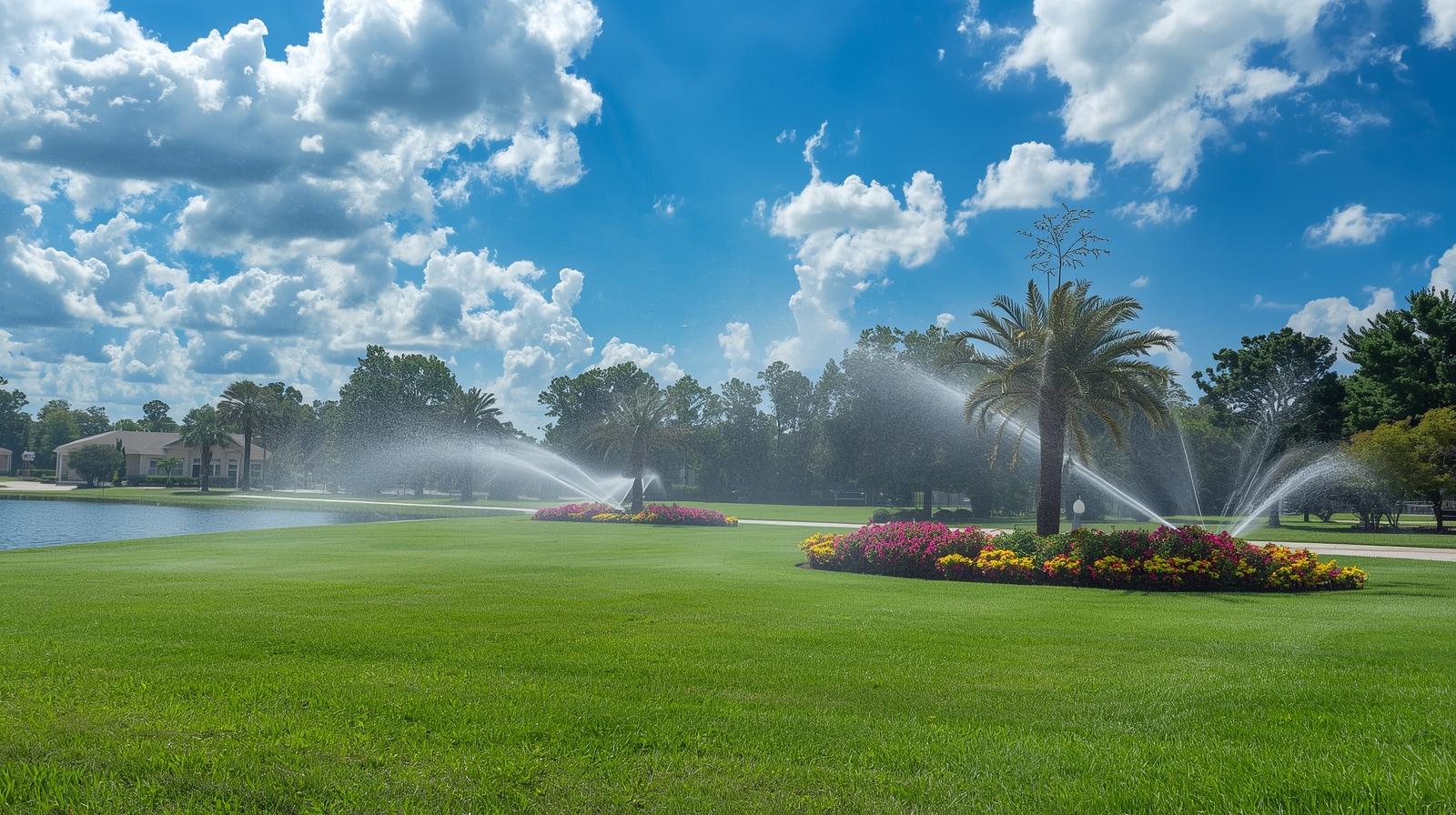
An irrigation system can deserve professional attention even when the homeowner cannot name a broken part. The lawn may have several dry arcs. A shrub bed may remain too wet. The controller still uses a schedule programmed by the previous owner. Heads appear to operate, but the property does not receive even coverage. That is a strong reason for a system-wide check.
A different homeowner may know exactly what failed. One valve stays open, a pipe has broken, the controller is blank, or a sprinkler head has been damaged by a vehicle. That is a repair call. We keep Annual Check & Adjust and System Repairs as separate irrigation services because the starting questions are different. Broader installation, maintenance, repair, and upgrade work also lives under full irrigation service.
The annual check starts with the whole property
An Annual Check & Adjust should look beyond the one area that first caught the homeowner's attention. The technician may need to review the controller schedule, rain logic or sensor, every zone, head operation, nozzle condition, spray direction, rotor travel, pressure, coverage, leaks, valve response, drip areas, turf and bed boundaries, changes in shade, new landscaping, and runoff. The purpose is to identify how the parts operate together.
A dry section can come from a clogged nozzle, weak pressure, poor spacing, an incorrect controller schedule, a blocked head, or another condition. Raising every zone's run time before inspecting the system may make the wet areas worse.
A repair call begins with a known failure
System Repairs makes more sense when the homeowner can identify a specific condition such as a zone that will not start, a zone that will not shut off, a broken pipe, a damaged head, a leaking valve, controller failure, a cut wire, a pump issue, water bubbling from the ground, sudden pressure loss, or irrigation flooding a structure or roadway. The technician still has to diagnose the cause. The difference is that the work order begins with a failed system component rather than a general performance review.
When booking, describe the condition plainly. A useful request is: Zone four continues to run after the controller is turned off. The irrigation shutoff is currently closed. The affected zone serves the front lawn. That provides more direction than saying the sprinklers are acting weird.
An annual check may create a repair list
The services are separate, but they can connect. A system-wide inspection may identify several damaged nozzles, one leaking valve, an outdated controller, pressure imbalance, heads buried below grade, zones serving mixed plant material, irrigation spraying onto pavement, drip lines needing repair, or a larger redesign need.
We should explain which items can be adjusted during the visit and which require additional authorization, material, excavation, or another appointment. A useful closeout separates what was adjusted today, what repair is recommended, what upgrade to consider, and what landscape or lawn issue sits outside irrigation. That final category matters because a functioning sprinkler system cannot correct every turf problem.
The lawn program can provide useful field information
We provide fertilization, weed control, insect control, fungus treatment, and irrigation under the same company. That creates an opportunity for the lawn technician to notice repeated dry arcs, constantly wet turf, runoff, sprinkler damage, fungus pressure, chinch-prone sunny edges, fertilizer response that differs by zone, or weeds concentrated in wet areas. Those observations should be handed to the irrigation team rather than every lawn symptom being treated with another lawn product.
Our earlier article already explained how lawn and irrigation diagnosis work together. The Annual Check & Adjust is the practical service that can investigate the mechanical side before another lawn treatment is added. Homeowners in Bradenton, Sarasota, Venice, and Lakewood Ranch often see those overlapping symptoms first.
New homeowners benefit from a baseline check
A buyer may inherit an operating system with no useful documentation. The controller has unfamiliar schedules. Zones are unlabeled. Some heads were installed for landscaping that no longer exists. The previous owner's lawn company may have adjusted the timer repeatedly without leaving records. An annual check can create a starting point.
Ask us to help document the controller model, zone list, area served, normal schedule, sensor, shutoff, valve locations where practical, repairs completed, repairs deferred, drip zones, and heads requiring future relocation. Photograph the final controller settings. That baseline makes future changes easier to understand.
The system should be observed in daylight
Many Southwest Florida systems run before sunrise. The homeowner sees the lawn later but rarely sees the irrigation operate. Before the appointment, manually observe each zone if the controller instructions and property conditions allow it. Record heads that fail to rise, water striking walls, blocked spray, runoff, misting, dry arcs, broken heads, zones serving the wrong area, long puddling, one head weaker than the rest, and controller mismatch. A short video of each problem is useful. Do not disassemble valves or energized controller components.
Program changes should be written down
After the check, ask for the updated schedule. Note each zone, the area it serves, start time, run time, watering days, and any notes such as full sun, shade, drip, or coverage adjustments. The exact schedule must follow the property and local watering requirements. The written record keeps later changes from being made blindly.
An upgrade is not automatically a repair
A system may operate with an older controller or conventional heads while the homeowner is considering newer technology. That is an upgrade discussion. The proposal should distinguish a failed component requiring repair, an existing component still operating, an optional efficiency improvement, a redesign needed because the landscape changed, controller replacement, pressure-regulated equipment, a new zone, drip conversion, and full system installation. We provide new installation, repairs, maintenance, and upgrades through irrigation service. The homeowner should know which category is being priced.
Choose the appointment by the question
Schedule Annual Check & Adjust when the system lacks a current baseline, coverage is uneven in several areas, the controller schedule is unclear, the landscape has changed, the system has not been reviewed recently, or lawn and irrigation symptoms overlap. Schedule System Repair when a known component is broken, water is actively leaking, a zone is stuck, the controller has failed, excavation or part replacement is likely, or the system cannot operate normally.
We serve Bradenton, Sarasota, Venice, Brandon, Lakewood Ranch, Osprey, Nokomis, Palmetto, North Port, Englewood, and nearby Southwest Florida communities. Read more about Greener Fields, browse the blog, or call 941-414-1644.
Not Sure Whether You Need a Check or a Repair?
Describe what you are seeing across the lawn or which component failed, and we will point you to the right irrigation visit.
Request an EstimateCall 941-414-1644