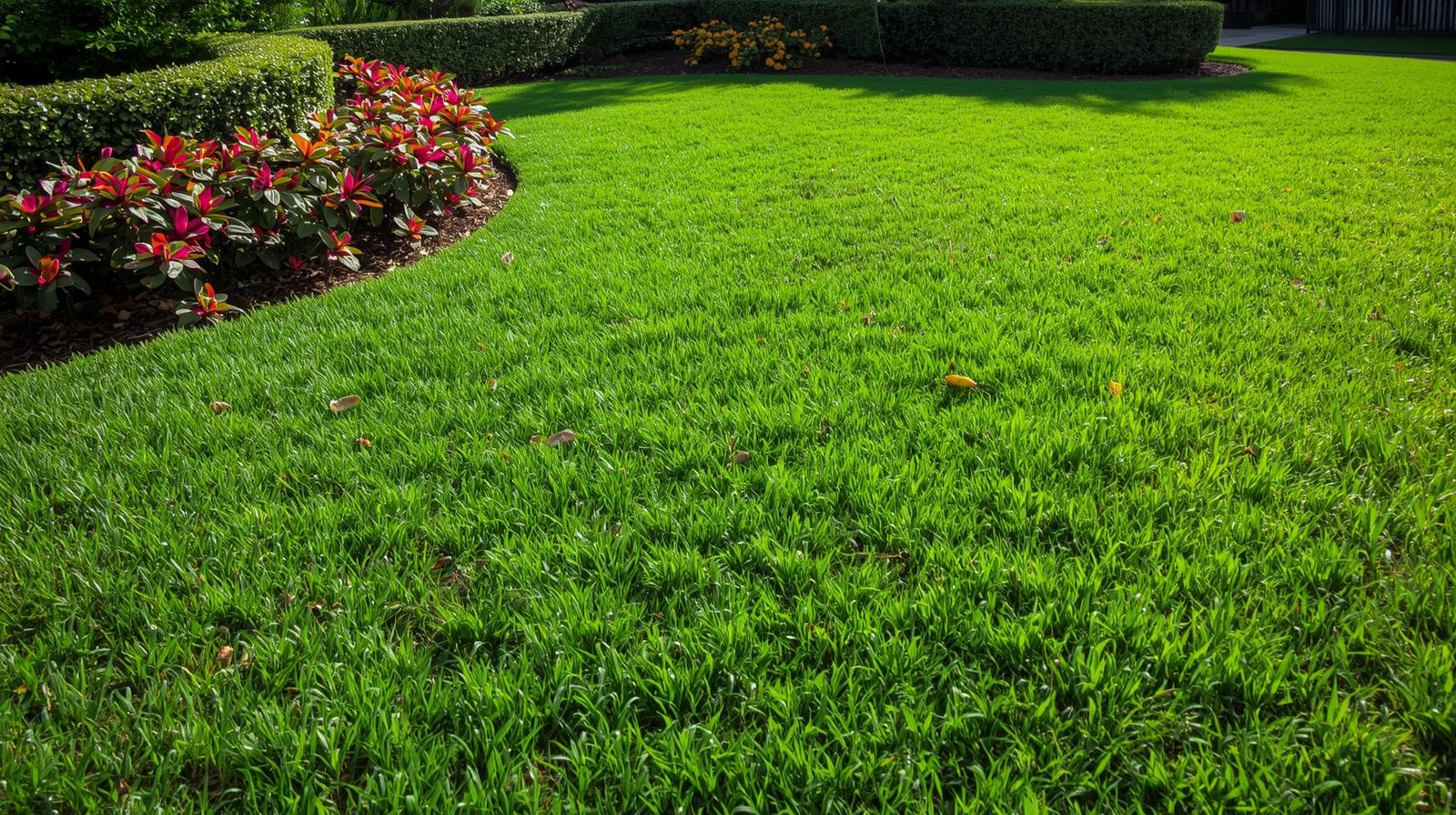
A newly purchased home can have a lawn that looks excellent on closing day. The buyer may not know who treated it, which products were applied, how often the irrigation runs, what kind of grass is present, or whether one attractive hedge has been receiving a separate insect and disease program. The appearance transferred with the property. The operating knowledge may not have.
We provide lawn, tree and shrub, pest, and irrigation programs under one company. That makes us a practical partner for building a new baseline, but the new owner should collect the available history before changing every service at once. Read more about Greener Fields and how those programs sit together.
Ask the seller for the outdoor records
The buyer may receive appliance manuals and roof invoices while receiving nothing about the landscape. Request lawn-company invoices, fertilization schedule, weed treatments, insect treatments, fungus history, grass type, sod installation date, irrigation map, controller instructions, repair invoices, well or pump information where applicable, tree and shrub treatments, household pest service, termite service information, perimeter pest records, HOA landscape rules, warranty information, and recent photographs. Partial records are still useful. A single irrigation invoice may reveal the controller model or location of a repaired valve.
Identify the turf before selecting the program
Southwest Florida properties may contain Saint Augustine, Zoysia, another turf type, or more than one grass in different sections. Our archive already discusses how Saint Augustine and Zoysia can behave differently when they share one property. Do not assume every green blade receives the same program.
During the first walkthrough, mark front turf, rear turf, pool-area turf, shaded sections, full-sun sections, new sod, mixed-grass boundaries, repeatedly thin areas, areas with artificial turf or groundcover, and HOA-maintained sections. The technician can then match recommendations to what is actually growing. Homeowners in Bradenton and Sarasota often discover more than one grass type after the first week of ownership.
Run the irrigation system before changing treatment
A lawn program cannot perform normally when one zone misses half of the yard or waters the same area twice. The buyer should observe every irrigation zone and document zone number, area served, head condition, runoff, weak pressure, broken pipe, blocked spray, wet shade, dry arcs, drip areas, controller schedule, rain sensor, and irrigation shutoff.
We separate Annual Check & Adjust, Full Service & Repair under irrigation service, and System Repairs, giving the new owner a way to request a baseline review rather than waiting for a failure. Do not substantially increase watering because the lawn looks pale during the first week after moving. The problem may not be universal thirst.
Ask which plants receive separate care
Palms, hedges, ornamental trees, flowering shrubs, and specimen plants may have been maintained separately from the lawn. We offer tree and shrub fertilization with deep-root feeding, species-specific formulas, micronutrients, seasonal applications, and soil-pH adjustment where appropriate. We also offer separate insect and disease control.
Create a list of important plants such as privacy hedges, entry palms, large shade trees, flowering shrubs, screen planting, pool landscaping, fruit trees, new ornamental installation, plants with a known history, and high-value specimens. Ask the seller which plants received treatment and why. A plant can look healthy precisely because it has been on an established program.
Separate household pests from landscape pests
The previous owner may have used one company for interior pests, another for perimeter service, and another for lawn insects. We keep household pest control and perimeter treatment as separate service categories, while lawn insect control belongs inside the turf program.
Note indoor concerns such as ants, roaches, spiders, silverfish, rodent activity, garage activity, and past treatment points. Around the building, look for exterior trails, mulch-bed activity, foundation moisture, entry points, lanai conditions, and garage perimeter. In the lawn, note fire-ant mounds, chinch or billbug history, sod-webworm symptoms, grubs, and turf damage. These observations belong in related but separate programs.
Do not cancel every existing service on closing day
The buyer may want to replace the seller's vendors. Before stopping an established program, find out what service is currently active, the last treatment date, the next scheduled visit, contract terms, products or methods used, conditions being monitored, warranty or callback coverage, equipment owned by the vendor, whether the system is prepaid, and whether service transfers. A gap may allow weeds, pests, irrigation problems, or plant conditions to progress while the new owner is still collecting quotes. The decision should be deliberate rather than automatic.
Build one property map
Because we provide several outdoor service categories, the first visit becomes more useful when the owner brings one map. Label turf types, irrigation zones, tree and shrub groups, foundation, pool and lanai, pet areas, children's play area, vegetable or herb garden, drainage, exterior pest locations, repeatedly wet areas, repeatedly dry areas, HOA responsibility, and areas handled by another vendor. The map does not need professional drafting. A printed aerial image or simple sketch can organize the conversation.
Rank the first month
A reasonable first-month sequence may look like this. Stop active damage first, including leaks, flooding, severe pest activity, or another urgent problem. Document irrigation next by running zones and creating a baseline. Identify turf and plants so you know what is growing. Review treatment history to avoid conflicting or duplicate applications. Inspect household and perimeter pest conditions. Set the recurring program. Schedule lower-priority enhancements later.
The exact order depends on the property. A broken irrigation main deserves attention before a routine fertilizer visit. An active indoor pest problem may need faster action than an ornamental feeding discussion.
Give the property time before redesigning every program
A new owner does not yet know how the yard behaves through heavy rain, dry periods, summer heat, guest traffic, and seasonal shade. We customize programs around the property rather than forcing one package onto every customer. Use the first several visits to build a record of which turf dries first, where weeds emerge, which zones run onto pavement, which insects recur, which plants change, how the lawn responds after treatment, which areas receive heavy traffic, and what happens after storms.
That record will produce a stronger program than making several aggressive changes during the first weekend of ownership. We are based at 5103 Lena Road, Suite 115, in Bradenton and can be reached at 941-414-1644. Start through contact when you are ready to build the handoff map.
Just Closed on a Southwest Florida Home?
Bring whatever outdoor records you have, and we can help build a lawn, irrigation, pest, and ornamental baseline before changing every program at once.
Request an EstimateCall 941-414-1644